
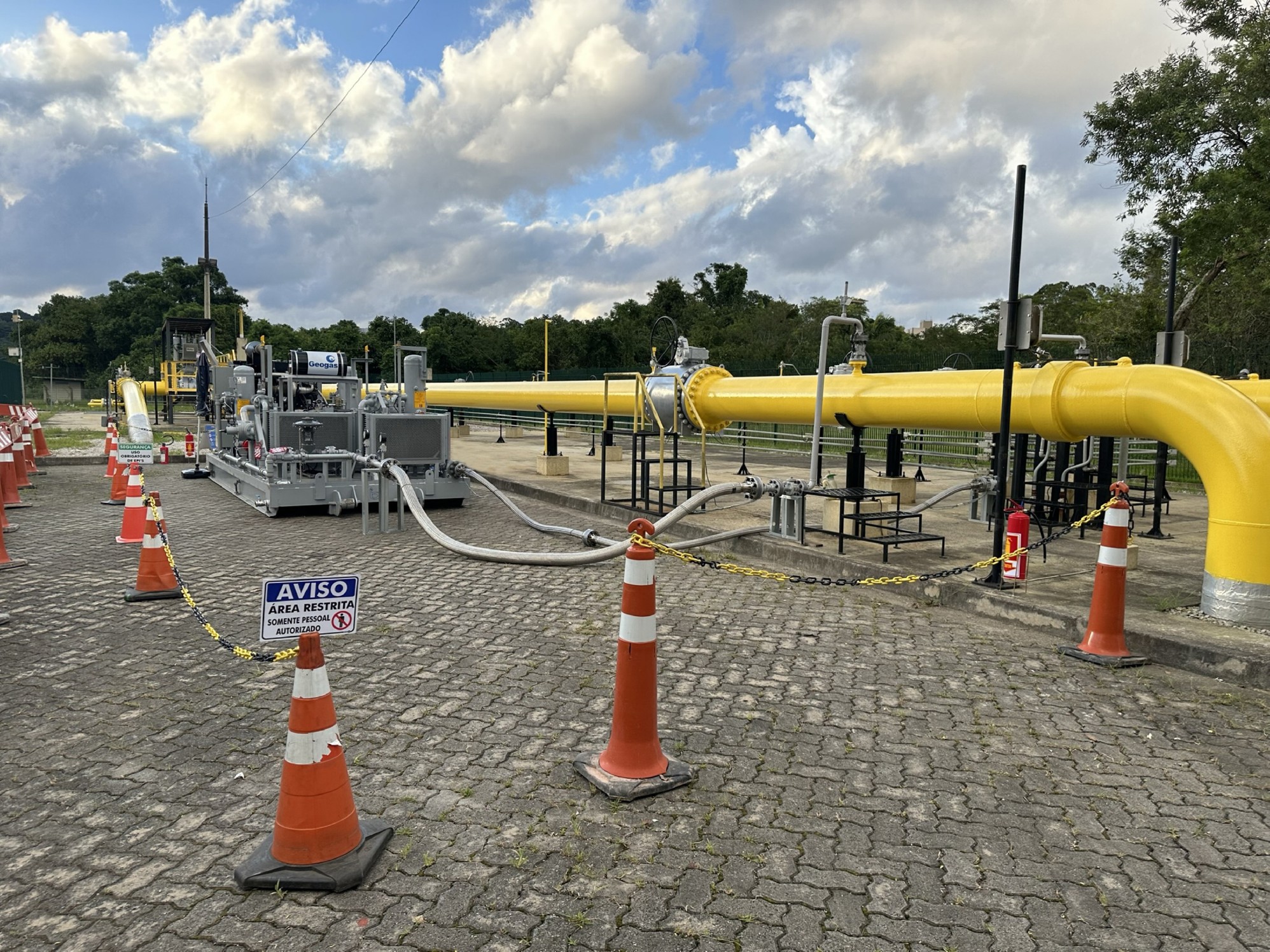
Reducing emissions
Recapturing gas keeps it in the pipes and out of the atmosphere, supporting environmental compliance.
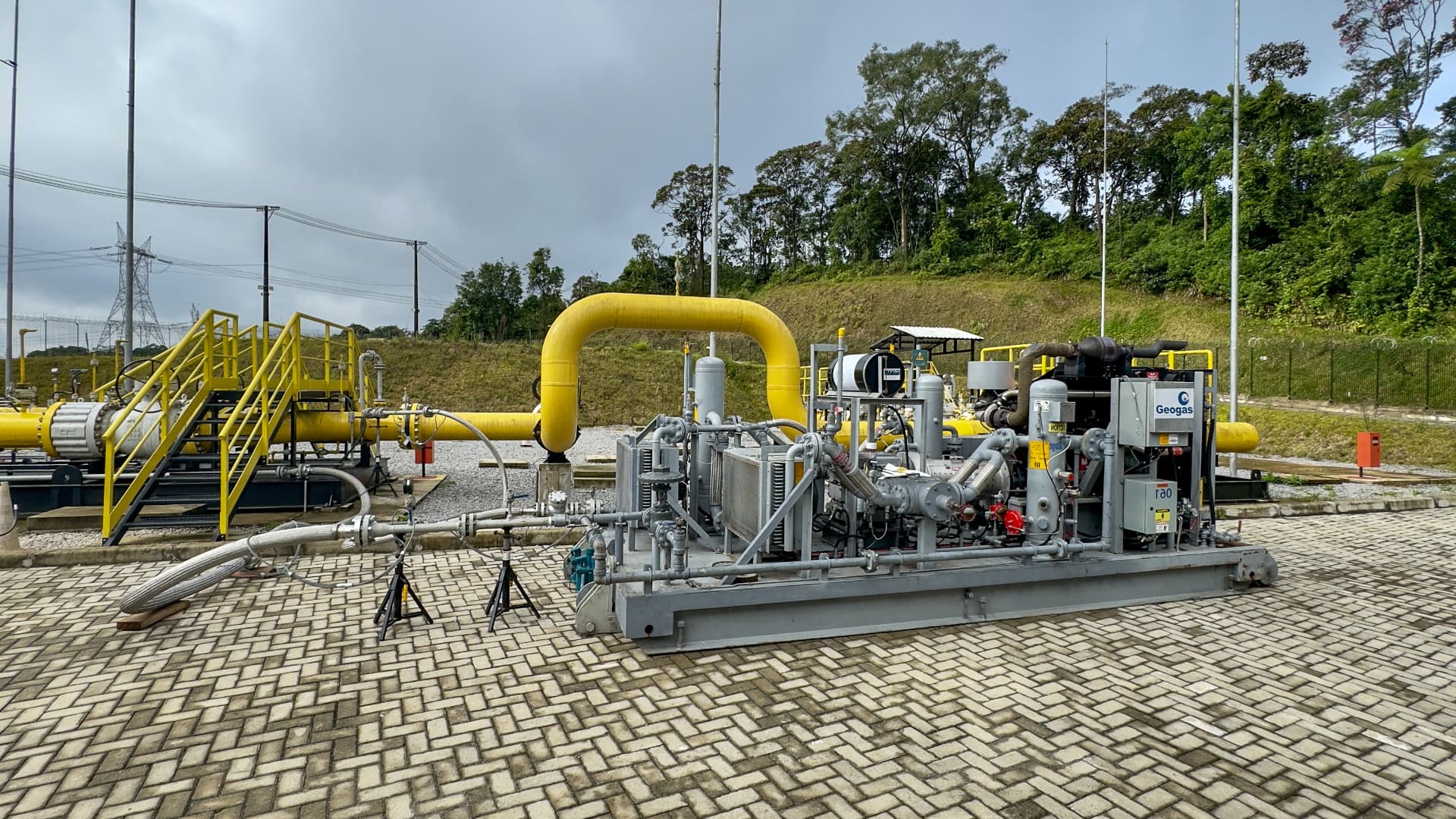
Decarbonization in Gas Transmission and Distribution
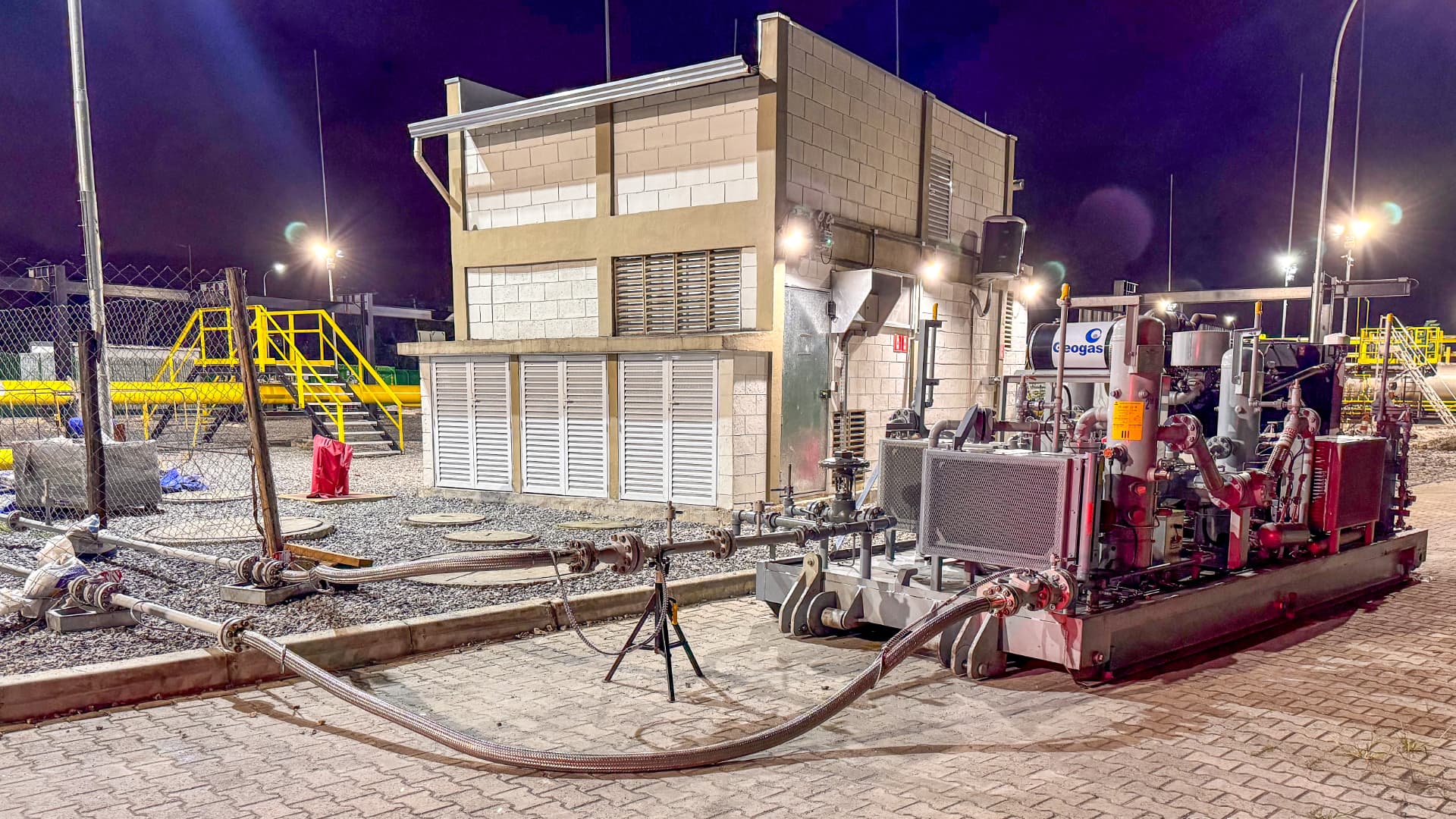
Mobile compression for gas transfer and recovery during pipeline and distribution-network depressurization, reducing venting, emissions and product loss for more efficient operations.
In gas transmission and distribution, a significant share of emissions comes not from failures or leaks, but from planned blowdowns during maintenance and asset interventions. To carry out this work safely, specific sections of a pipeline or distribution network must be isolated and depressurized. In conventional practice, the gas trapped in the isolated section is vented to the atmosphere.
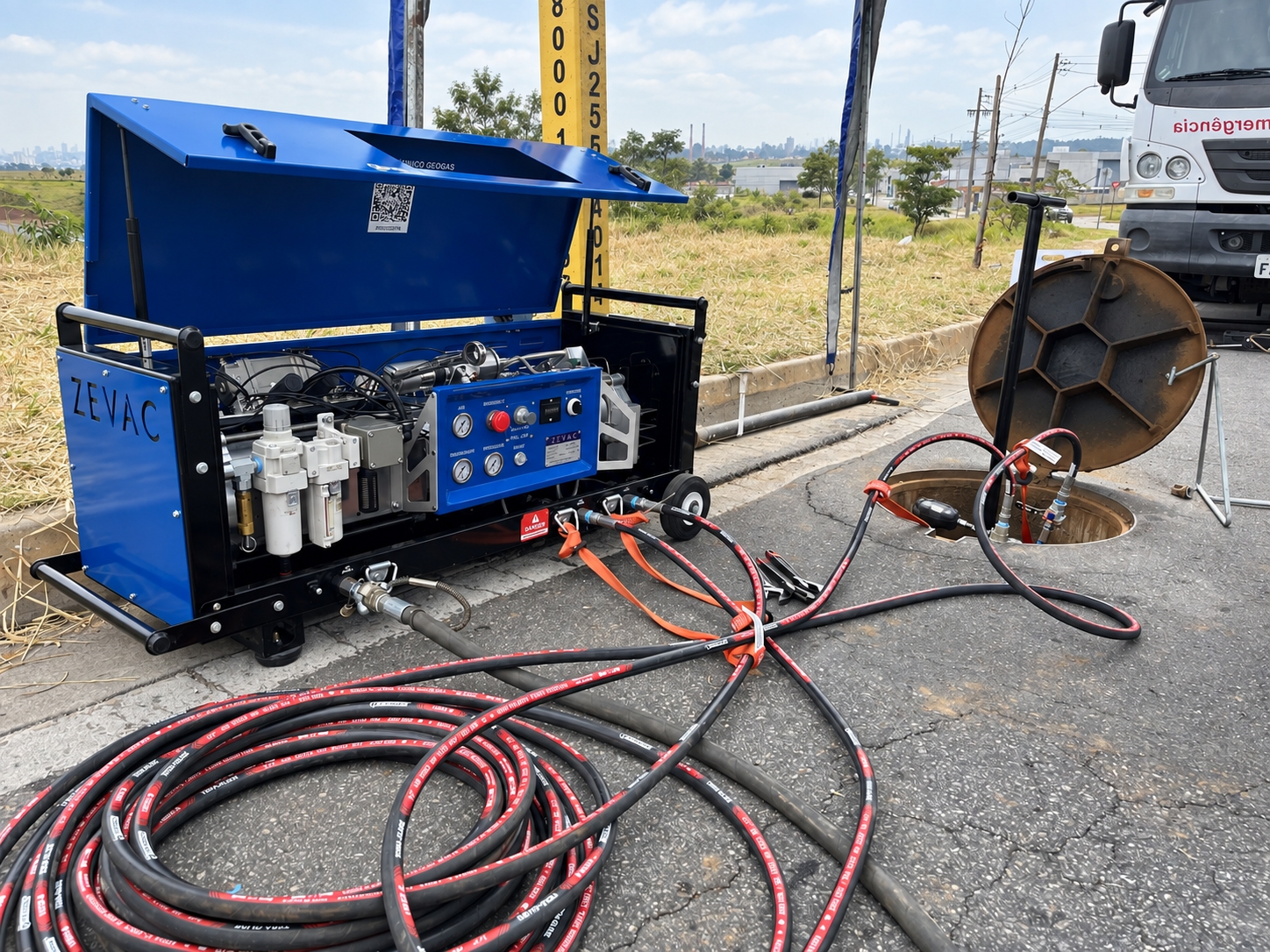
Venting natural gas increases emissions because methane has a global warming potential 28 times higher than CO₂.
Avoiding venting or flaring improves working conditions and reduces local impacts such as noise and odor.
Cross-compression keeps saleable gas in the system instead of losing it to the atmosphere.
Lower emissions simplify emissions management and environmental compliance reporting.
The solution
Geogas uses mobile compression to transfer gas from the isolated section under intervention to another part of the system, either upstream or downstream, in a controlled manner.
We review pressures, gas volumes, site constraints and the available operating window to define the most suitable mobile compressor and configuration.
A pipeline section is isolated so the operation can be performed safely.
The equipment connects easily to gas lines and pipelines, allowing for quick setup and operation.
Gas is transferred to another section of the pipeline or to a parallel pipeline until the agreed final pressure is reached.
Once the job is complete, the equipment is demobilized and the client receives a report detailing recovered gas volumes and estimated avoided emissions, using a methodology based on the Brazilian GHG Protocol Program.
The mobile compressor, configuration and operating time are defined according to the specific conditions of each operation.
Business value
Recapturing gas keeps it in the pipes and out of the atmosphere, supporting environmental compliance.
Avoiding venting or flaring creates safer working conditions for your crews and reduces exposure, noise and odor in surrounding areas.
Recovered gas returns to the system as a saleable product.
The solution reduces costs associated with venting, flaring, permits and mobilizations triggered by false leak reports.
Mobile compression, temporary connections, fast mobilization and minimal interference with existing facilities.
Operations performed
Results demonstrating gas recovery and emissions reduction across different operating scenarios.

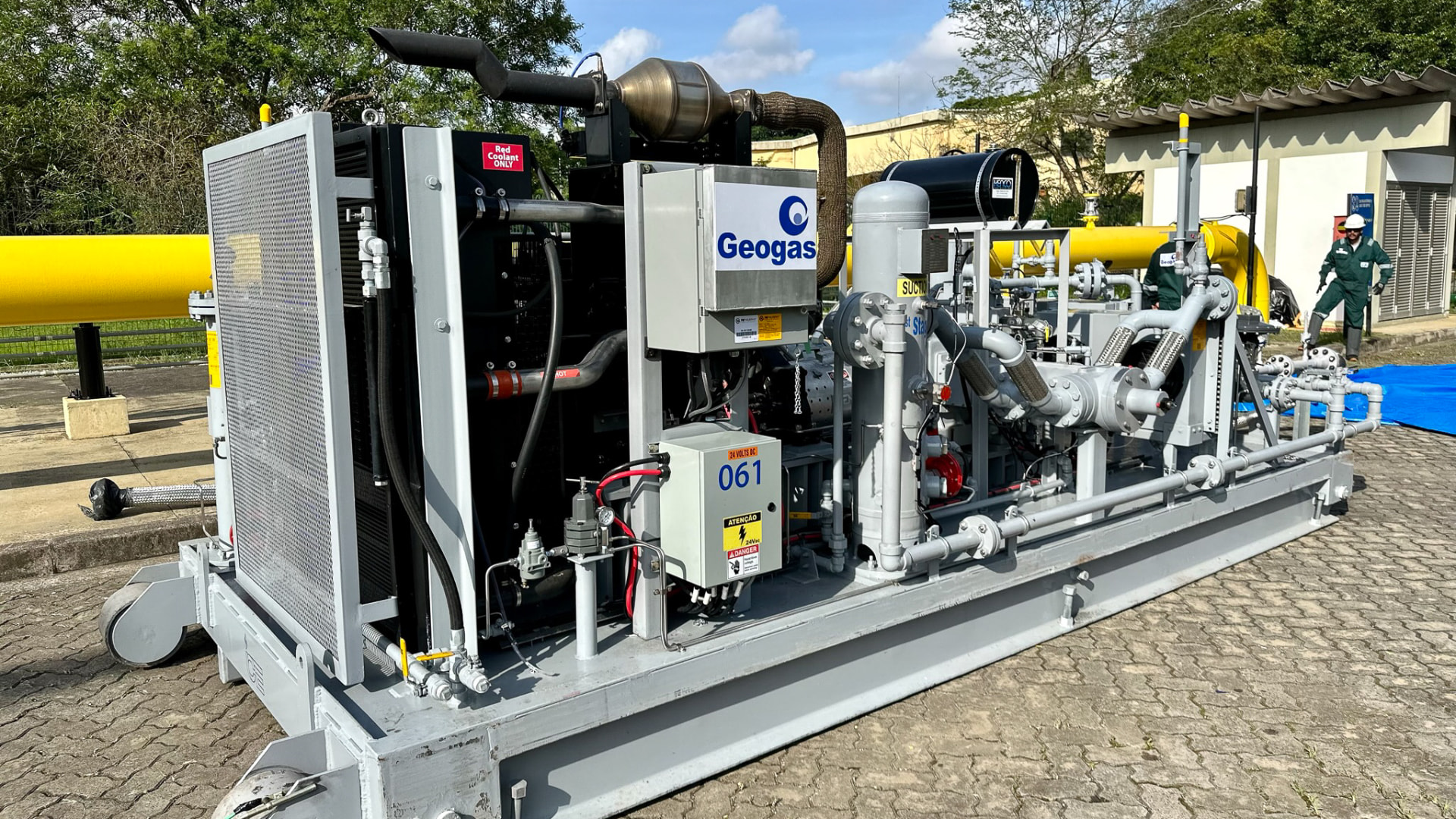
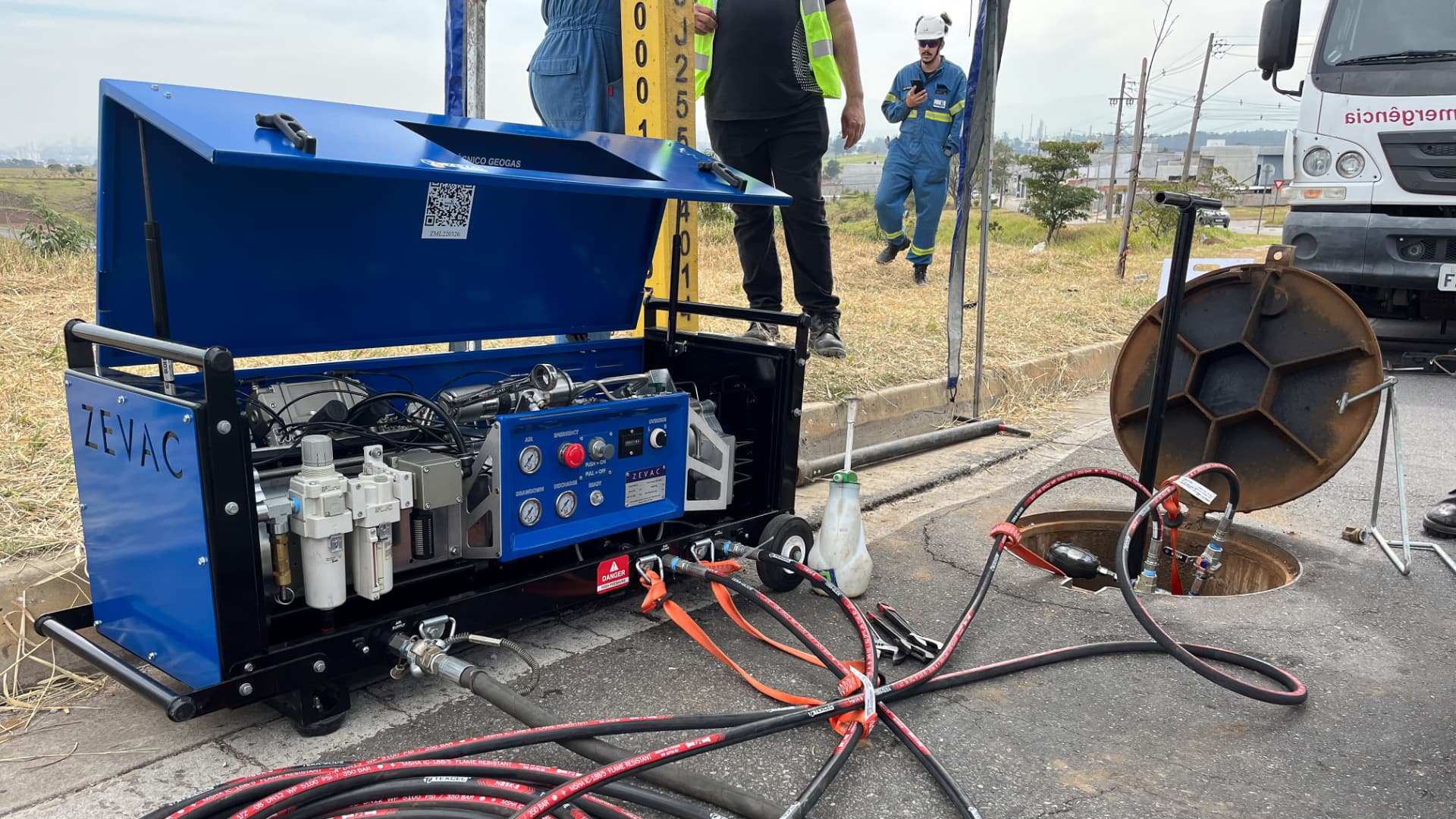
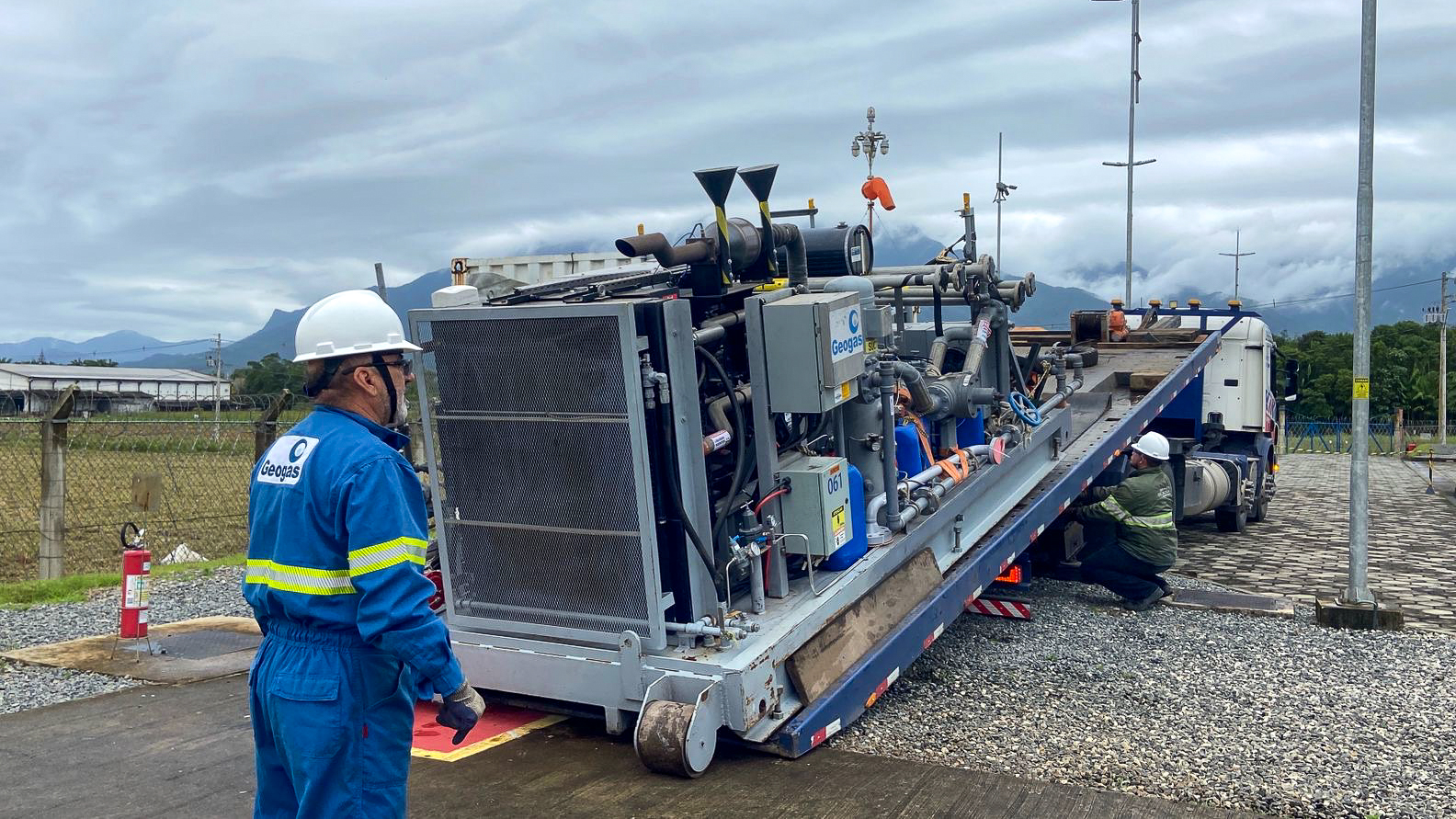
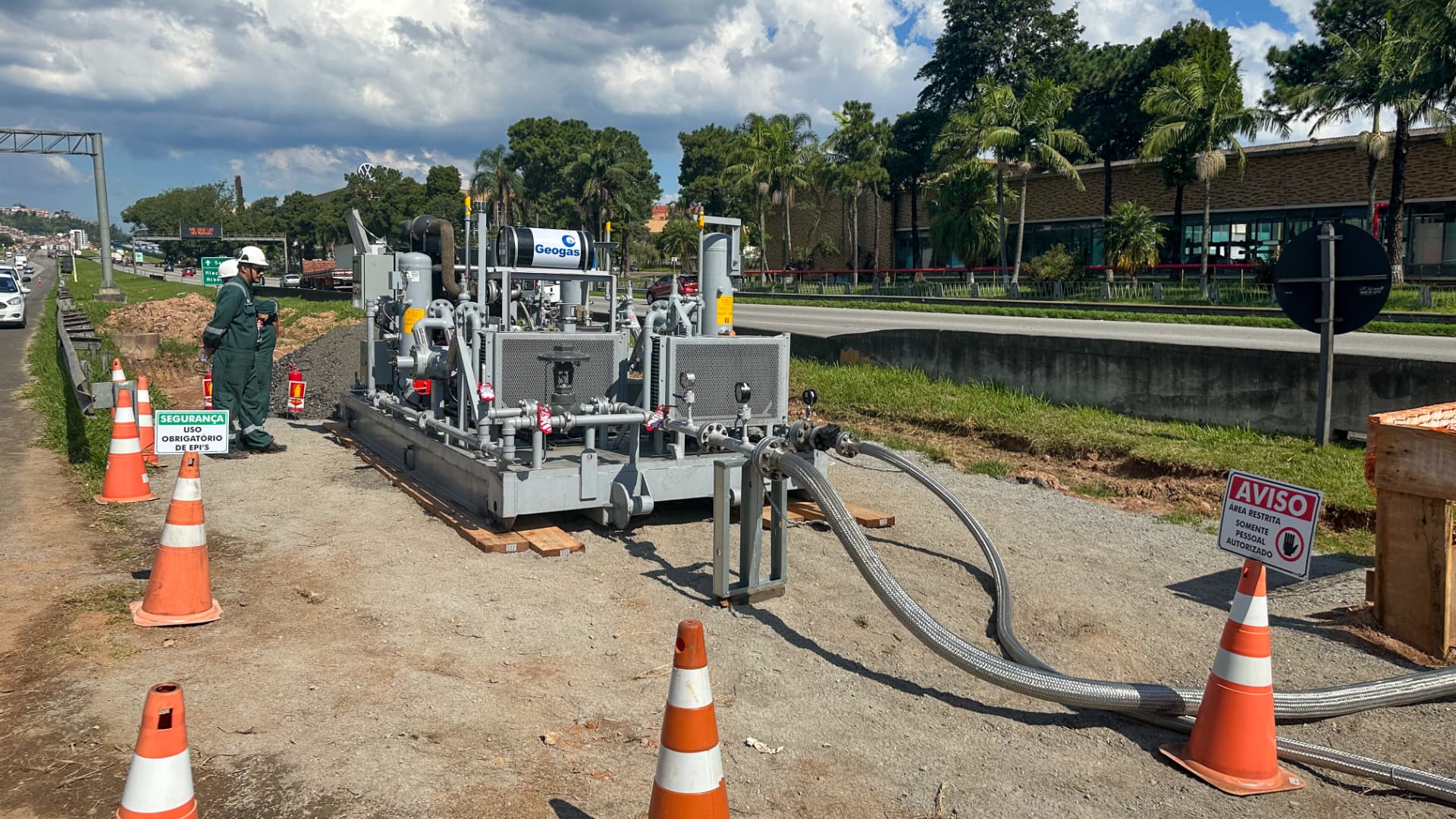
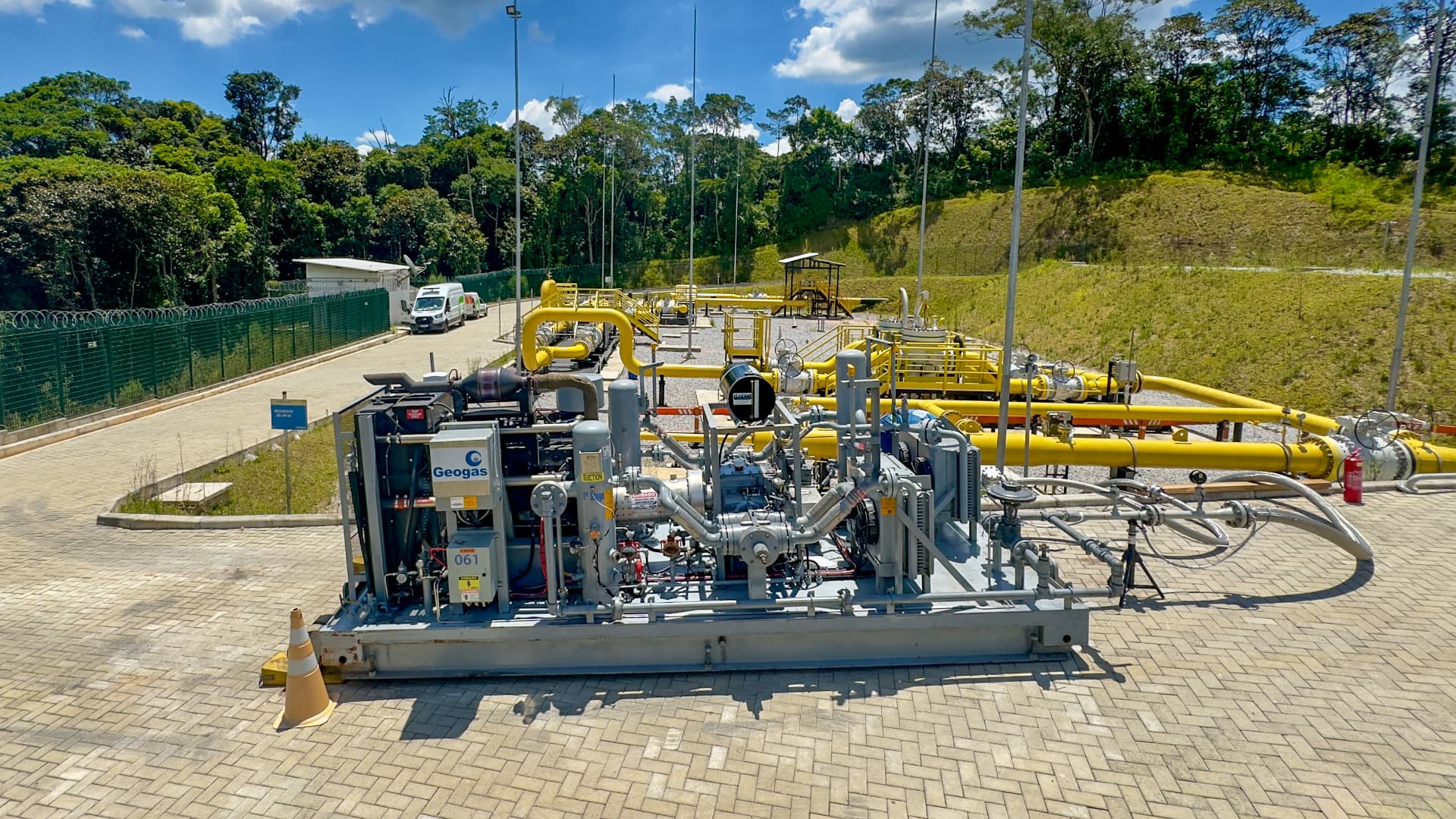
Equivalency based on the GHG Protocol 2024.0.2 tool: 2023 gasoline flex-fuel passenger vehicle, 12,000 km/year = 2.02 tCO₂/year.
Ideal Applications
Recover the gas inventory that would otherwise be vented before tie-ins, isolations, valve maintenance, insulating-joint work and other pipeline interventions.
Continuously recover gas from reciprocating-compressor rod packing, recompressing it and returning it to the system instead of venting it to atmosphere.
Recover gas from pig launcher and receiver barrels during inspection and cleaning campaigns.
Reduce venting and gas losses during new-line commissioning and support pressurization and depressurization activities.
Recover gas from depressurization of filters, gas-operated actuators, vessels and tanks.
Support repairs, line-section replacements, odorant concentration recovery and other interventions requiring network isolation and depressurization.
Geogas selects and integrates the right equipment for each operation, tailored to distribution networks and pipelines.
For medium- to high-volume gas transfer.
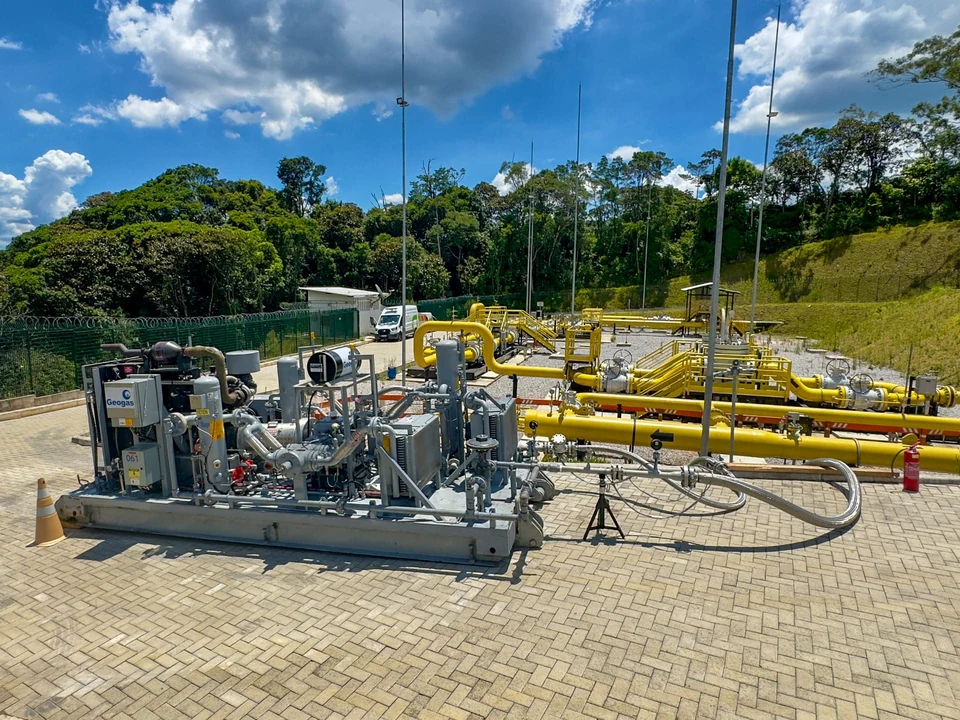
Single-skid, multistage reciprocating compressor package.
Solution portfolio
Solutions suited to different pressures, flow rates, usage frequencies and operating conditions.
Mobile equipment
Integrate mobile compression into routine operations to support your field teams.
Permanent installation
Solutions integrated into facility infrastructure for recurring operations and closed-vent gas recovery.
Specialized service
Geogas mobilizes equipment and field specialists according to your operating plan.
Engineering
Equipment, systems and service configurations tailored to the requirements of each operation.
International partnerships
Geogas is the exclusive representative and distributor of ZEVAC and GENIS technologies across South America. For equipment, services or spare parts, contact our team.


About Geogas
Geogas designs, installs, operates and maintains gas compression systems and natural gas infrastructure for producers, operators, transmission companies and distribution utilities.
EPC and O&M for natural gas assets

2025 Gold Seal — Verified GHG Inventory under the Brazilian GHG Protocol Program.
Solutions for production, gathering, gas transfer, transmission and injection/withdrawal operations.
Treatment facilities, metering stations, pipelines and delivery points.
Gas recovery and emissions mitigation across operations.
Talk to the Geogas team to assess how the solution could be applied to your distribution network or pipeline conditions.